City notices are setting firm deadlines and warning of possible water shutoff.
Here’s what commercial and industrial property owners need to know,
and how to get compliant before the deadline.
ROSSFORD, Ohio —Over the past several weeks, the IPS Service Group has taken a steady stream of calls from Toledo property owners, ranging from a major institution to several smaller businesses. Each of them was holding a compliance notice from the City of Toledo about their backflow prevention assemblies.
The notices are straightforward and they’re serious. One second-notice letter we reviewed sets a final compliance deadline. It warns that missing the deadline will mean continued non-compliance status, more notifications, and possible termination of water service by the City of Toledo.
If your facility hasn’t had its backflow assemblies tested this year, you can expect a similar letter.
What’s Driving the Push
Two changes are behind the recent wave of notices.
A dedicated program manager. In October 2025, HydroCorp announced that the City of Toledo had contracted with it to implement and manage the City’s commercial cross-connection control program. That covers a system with more than 130,000 service connections. HydroCorp now schedules compliance inspections and follows up with properties that are out of compliance.
A new online reporting system. The City no longer accepts paper backflow test reports. All commercial customers have to submit their annual backflow test and maintenance reports through the HydroSoft online portal. Under the new system, a missing report is easy to spot.
The requirement itself isn’t new. Chapter 204 of the Toledo Municipal Code and Ohio Administrative Code 3745-95 have required backflow protection and annual testing for years. What has changed is how closely compliance is being tracked.
What the Code Requires
Under Toledo Municipal Code 204.09:
- Reduced pressure principle (RP) assemblies must be tested at installation and at least every 12-months, and rebuilt at least every five years.
- Double check valve assemblies must be tested at installation and at least every 12-months, and internally inspected and rebuilt at least every 30-months.
- Pressure vacuum breakers must be tested at installation and at least every 12-months.
- All testing must be done by a state-certified backflow tester who is also registered with the City’s Division of Water Distribution. The property owner pays for testing.
- The owner must keep a complete record of every test, inspection, and repair for each device.
The City also requires a licensed plumbing contractor to install backflow assemblies.
“Compliant at the Meter” Isn’t the Whole Story
Even facilities that pass the City’s inspection are being told they aren’t done. One City notice we reviewed confirmed that a facility was protected by an approved assembly at its main service connection. It then pointed out that this containment device protects the public water supply but doesn’t remove risks inside the building’s own plumbing. The owner is still responsible for delivering safe water to staff and the public.
The City strongly recommends three more steps:
- Conduct an internal cross-connection survey of the facility’s water system.
- Make sure all piping is clearly labeled.
- Test all internal backflow prevention assemblies.
For plants, campuses, and other complex facilities, this is where the real exposure is. Boilers, chemically treated heating systems, process lines, irrigation, and fire protection systems are all common cross-connection hazards.
Received a Notice? Here’s What to Do
- Check the deadline. Second notices carry a final compliance date. Don’t let it pass.
- Schedule testing with a certified, City-registered tester. Any new assembly also has to be tested at installation.
- Correct any deficiencies listed on the notice. That may mean installing, repairing, or replacing assemblies.
- Make sure the test report is filed in HydroSoft.
- Schedule your compliance re-inspection through HydroCorp, using the contact information on your notice.
- Put every assembly on an annual testing schedule so you don’t end up back here next year.
How IPS Can Help
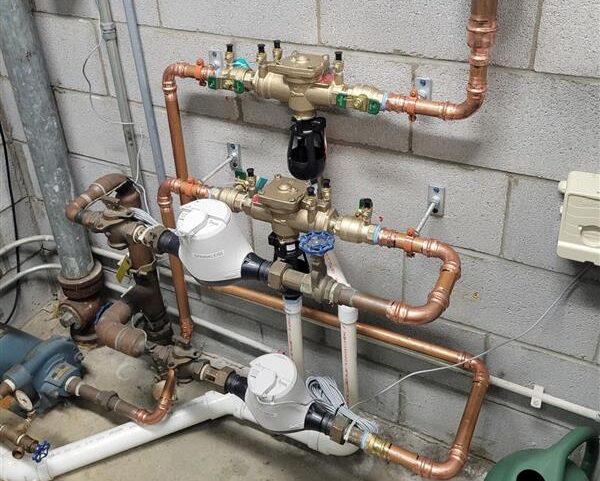
The IPS Service Group handles backflow prevention from start to finish for multiple municipalities across Northwest Ohio, including the City of Toledo, including:
- Annual testing of RP, double check, and pressure vacuum breaker assemblies by certified, City of Toledo–registered testers
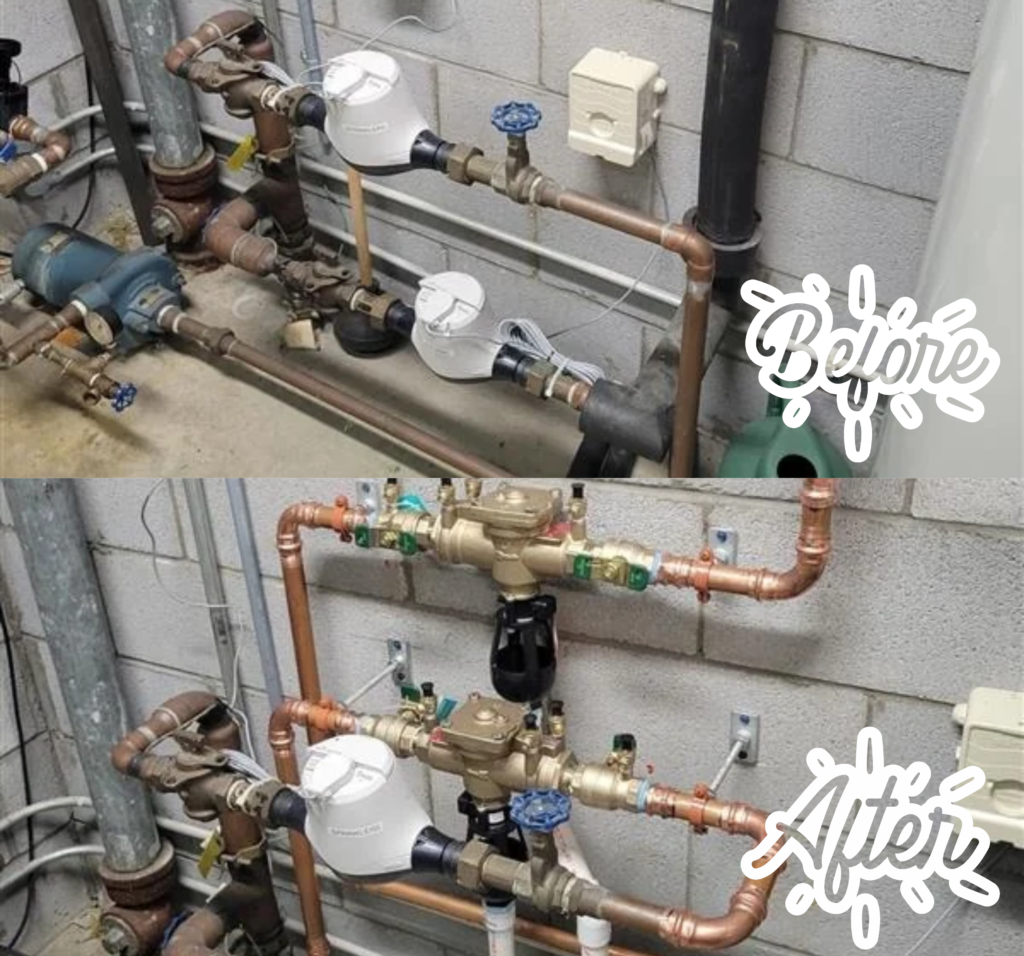
- Installation, repair, rebuild, and replacement of backflow assemblies
- Report submission through the City’s HydroSoft portal
- Annual scheduling, so your assemblies stay compliant year after year
IPS has served Northwest Ohio’s industrial, commercial, and institutional facilities since 1985. Because the IPS Service Group is part of a full-service mechanical, electrical, and piping contractor, a failed device or a newly identified hazard doesn’t mean finding a second company. We can test it, fix it, and document it.
Don’t wait for a second notice. Contact IPS’s Service Group today to schedule backflow testing or installation.
About IPS
Founded in 1985 and headquartered in Rossford, Ohio, IPS — Industrial Power Systems — is a family-owned industrial, general, and specialty contractor delivering projects from concept to completion, and beyond, across the country. IPS self-performs mechanical, electrical, general trades, fabrication, sheet metal, 24/7 HVAC service, and virtual design & construction work, handling any size project with the same standard of Integrity, Performance, and Safety.
Click here to check out our full menu of services.